Every conversation about AI eventually slides into one of two camps: end-of-days panic or smug, tech-bro reassurance. Either we’re all doomed or everything will be fine and we should just upskill and make sure the robot vacuum software is up to date. As usual, the truth sits somewhere less dramatic, and far more interesting, even exciting.
AI isn’t coming for jobs so much as it’s coming for functions. The distinction between jobs or profession and function is important, because while some roles are genuinely vulnerable, others are being reshaped and propelled and a huge number of critical professions are barely touched at all.
Instead of asking ‘Will AI take my job?’, the more useful question is, ‘How much of what I do overlaps with what AI is good at?’
Once you look at it through less panicked goggles, three broad categories line up before you.
1. Professions with the most overlap with AI
These are roles built around patterns, repetition, rules and synthesis which is exactly where AI takes off like a jumbo. This doesn’t mean these professions vanish, but it does mean they have changed, will continue to shrink in size, and demand more sophistication from fewer people.
Those include:
- Copywriting, especially SEO, ad variants, product descriptions (i.e. the basic stuff that doesn’t beg for life experience or nuance).
- Commodity journalism and content writing – high word count, low talent.
- Basic editing and proofreading – important, yes; soulful, no. Machines love rules and do not get bored or sloppy reading 300 page catalogues for hinges and drawer runners.
- Translation (non-specialist, high-volume) – good for menus, manuals and corporate comms. Absolutely not for poetry, humour or explaining Australian slang.
- Bookkeeping and tax preparation – If your job is rules, cost centres and receipts, AI is all over it like an abacus on crack.
- Junior accounting and auditing – no judgement of your expenses when you use AI. Have you seen The Accountant with Ben Affleck? AI could have found those issues in a jiffy with a lot less bloodshed IMO.
- Data analysis at a descriptive or dashboard level – already off and running like a bushfire with a tailwind.
- Paralegal research and contract review – easy McPeasy for AI.
- Junior software development and quality assurance testing – AI is very good at repetitive logic and does not punch the keyboard when something fails over and over again.
- CRM management and email marketing – Segment the list, trigger the email, tweak the spend, repeat forever. AI loves funnels almost as much as marketers love saying the word funnel.
In these roles, AI can already do two thirds of the work faster and cheaper than a human being. The remaining value lies in oversight, judgement, taste and accountability. Only humans can do this properly. The risk isn’t total replacement of you in your role, it’s compression. There will soon be fewer entry-level roles and higher output expectations. We will see a widening gap between those who can direct AI well and those who can’t or won’t.
If your role mainly involves producing low grade words, numbers, or summaries, AI is already sitting in your chair. Ouchy.
2. Professions in the middle ground
This is where most of us sit and where the enormous opportunity is. These roles still require context, judgement, creativity, persuasion and ethical decision-making – dare I say TALENT – but are increasingly turbo-powered by AI as a co-pilot*.
* Not a plug for Microsoft. I mean the term literally.
Professions I am referring to include:
- Brand strategists and creative directors – long gone are the days of hand rendered storyboards and mock ups but someone still has to decide which concept is brand aligned, which is a total embarrassment to the company and which will cause the right kind of stir.
- Senior copywriters and designers – humans still need to decide what is brave, funny, offensive, boring or lawsuit adjacent. Discernment is the job now.
- Architects – AI can optimise space, materials and cost. Humans still have to design places people want to live in and not quietly resent.
- Lawyers (strategy, negotiation, advocacy) – only humans can read the room, sense power dynamics and know when to push, pause or shut up.
- Financial planners – AI can crunch numbers and model scenarios but humans deal with fear, denial, optimism and couples who absolutely do not agree about money.
- Consultants – while AI can analyse data, humans have to turn that analysis into advice their client will actually follow, which is the hardest part.
- Recruiters and HR professionals – AI can read CVs but only humans can read humans.
- Teachers, trainers, and coaches – AI can deliver information but it’s educators who inspire confidence, spot disengagement and know when someone needs encouragement, challenge or a biscuit.
- Product managers – AI can organise the chaos. Humans choose direction, manage trade-offs and take the blame when everyone hates the update.
- Entrepreneurs and founders – AI can speed everything up but these irreplaceable whackos still take the risk, live with the consequences and explain to their families why this idea is definitely going to work.
- Project and operations managers – AI can produce epic timelines but only Bruno can make suppliers meet their deadlines.
In these professions, AI doesn’t replace humans but it raises the bar. Mediocre performers will struggle because their ‘good enough’ output is now automated. High performers, on the other hand, become much more productive and outward facing.
The value here shifts from doing to deciding on what matters, what should be prioritised, what should be ignored and what feels right, ethical, human.
AI can generate options. Humans still choose direction. Yeah, but computers will get there eventually! Shut up, Roger.
3. Professions least affected by AI
Some work remains stubbornly human, not because AI isn’t a clever duck, but because trust, presence and responsibility can’t be outsourced to a machine.
These roles involve bodies, risk, care, moral authority or physical reality.
These include the people we rely on most in our community:
- Nurses and healthcare workers – love your guts.
- Aged care and disability support – like nursing but less glamorous.
- Social workers and childcare educators – very human indeed.
- Trades: electricians, plumbers, builders, mechanics – long live the hot tradie!
- Emergency services: paramedics, firefighters, police – imagine a robot showing up to a car crash or a house fire? AI can send the closest ambo but it can’t resus the OD.
- Judges and senior legal authorities – because no machine can ever replace Judge Judy.
- CEOs, board directors, diplomats – would be nice if the board could be replaced with a nicer version. Ahem, I mean yes, crucial roles to humanity.
- Performers, comedians, novelists, musicians – we simply can’t live without legitimate art and no, AI cannot write a novel like a talented human can. It can write drivel based on averages and who can be bothered reading an average novel? And who would Booktokkers cancel if they didn’t have authors?
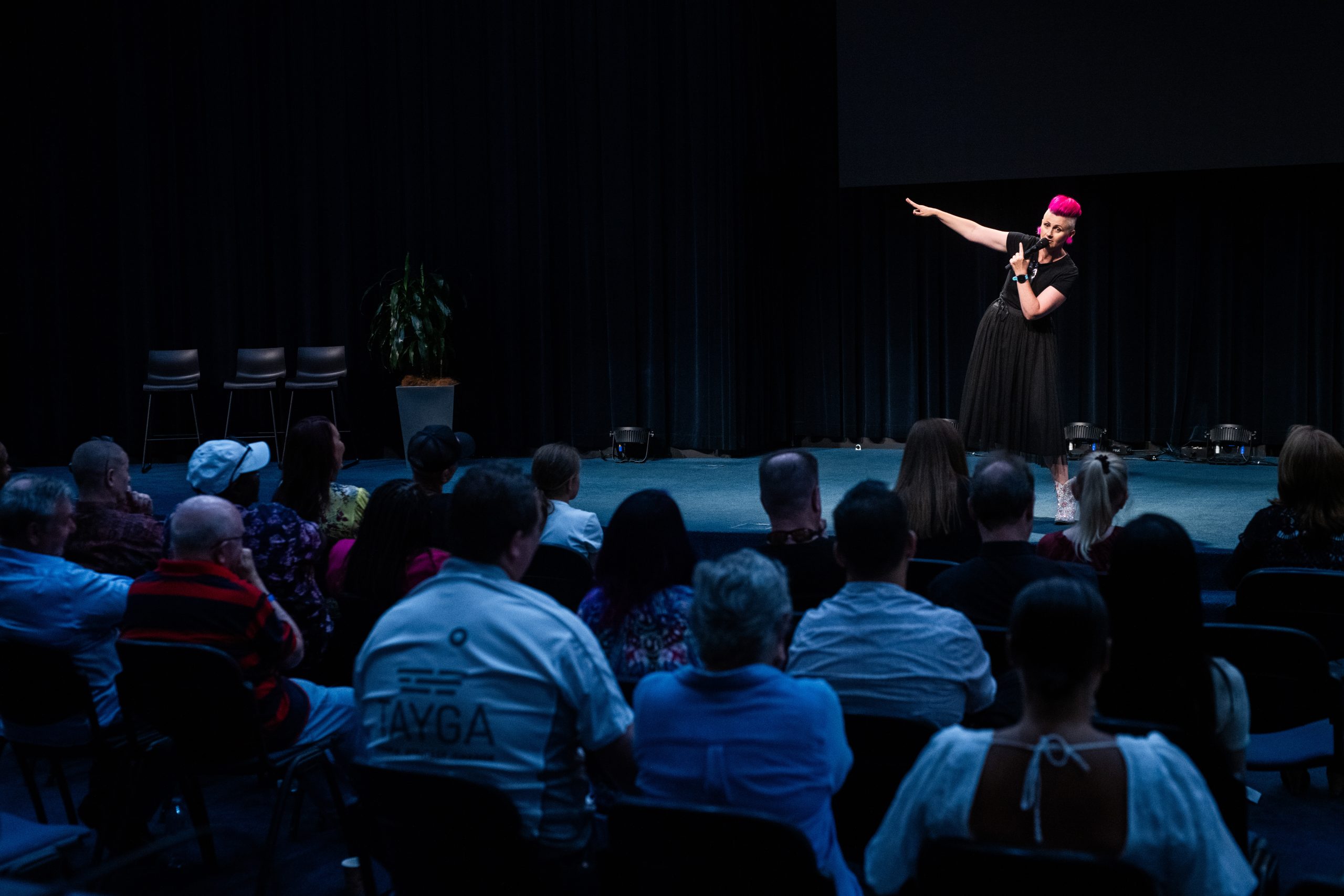
- Conference speakers and facilitators – hey that’s me! Book me here.
AI may assist these professionals, but it cannot replace the human relationship at the core of the work. When something goes wrong, we don’t want an online bot to change the dressing, we want a person who can be communicated with, trusted, thanked or held accountable.
If you’re trying to place your own work on the spectrum, ask yourself:
A. Is my job mostly about producing words, numbers, reports, outputs? You have a high AI overlap.
- Is my job mostly about deciding? Judgement, strategy, framing, trade-offs? You are in the middle ground.
- Is my job mostly about being there? Presence, care, risk, trust, physical skill? Your profession will have a low AI impact on the front lines.
The biggest change AI brings isn’t mass unemployment. It’s a re-pricing of human effort, skill and discernment.
Tasks become cheaper. Judgement becomes more valuable. Experience, taste, ethics, and emotional intelligence are no longer ‘soft skills’ and have become the main event. For people with talent, depth and the confidence to make decisions, AI is not a threat. It’s your best mate.
AI will happily do the busywork. The question is whether you’re positioned to do the thinking. And that, finally, is a much better problem to have.